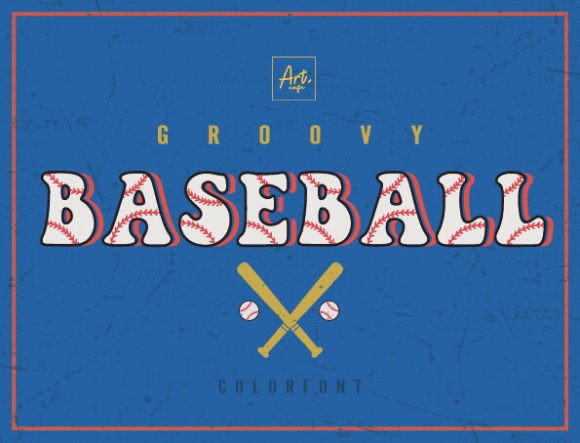
Groovy Baseball: A Typeface That Hits a Retro Home Run
There’s a specific feeling that hits you when you watch grainy footage of a 1970s baseball broadcast. It isn't just the mustaches or the powder-blue uniforms; it's the typography. The thick, rounded, often shadowed letters that screamed "All-Star Game" or "World Series" possessed a unique charisma. The Groovy Baseball font captures that exact energy. It is a vibrant blend of retro aesthetics and playful bravado, perfectly tuned for the sports world but versatile enough to bring a nostalgic punch to modern design projects. For designers and creators looking to inject personality into their work, this typeface offers a direct line to the heart of Game Day.
Understanding the Visual DNA of Groovy Baseball
At its core, Groovy Baseball is a display font designed to dominate headlines and command attention. Visually, it draws heavy inspiration from the "fat pen" era of hand-lettering. You will notice soft, rounded terminals and a distinct lack of sharp corners, giving the letterforms a friendly, approachable vibe. The characters often feature a subtle inline or extruded shadow effect, which adds depth and a three-dimensional quality to the text without requiring additional editing in design software. This isn't just a standard block font; it has a rhythmic flow that mimics the curve of a ball or the swing of a bat.
The personality of this creative font is undeniably confident. It doesn't whisper; it cheers. The weight of the strokes is substantial, making it ideal for high-impact situations where legibility at a distance is crucial. However, because it is a stylized display font, it carries specific traits—like retro kerning and decorative swashes—that define its character. It sits comfortably between a heavy sans serif font and a stylized script font, borrowing the stability of the former and the flair of the latter. For anyone working on brand identity within the entertainment, food, or athletic sectors, this font provides an instant injection of heritage and fun.
Where to Deploy This Vibrant Typeface
Knowing where to use a font like Groovy Baseball is just as important as liking how it looks. Because of its bold weight and distinct personality, it shines brightest in specific applications. If you are working on packaging design for a craft brewery, a BBQ sauce label, or a line of vintage-inspired clothing, this font instantly communicates a hand-crafted, artisanal quality. It suggests that the product inside is made with care and has a story to tell.
In the realm of editorial design and publishing, consider using Groovy Baseball for chapter titles, pull quotes, or magazine covers. A travel magazine focusing on American road trips or a sports biography would benefit immensely from this typeface. It sets the mood before the reader even engages with the body text. Similarly, in web design, it is a fantastic choice for hero section headers. A large, bold headline in Groovy Baseball can break the monotony of standard web typography, immediately engaging the user and reducing bounce rates by promising visual interest.
For social media graphics, where the scroll speed is lightning-fast, you need a font that stops the thumb. Groovy Baseball does exactly that. It is perfect for announcing sales, celebrating milestones, or creating event posters. Small business owners, particularly those running sports academies, retro arcades, or local community leagues, will find this font invaluable for creating professional-looking marketing materials without needing a full design team.
Strategic Typography: Influence and Brand Perception
Typography is rarely just about decoration; it is a silent ambassador for your brand. When you choose a premium font like Groovy Baseball, you are making a strategic decision about how your audience perceives you. The font evokes a sense of nostalgia and reliability. In a digital age that often feels sterile and corporate, using a typeface with organic roots and a retro vibe can make a brand feel more human and accessible.
Visual hierarchy is another critical factor. In any layout, the eye needs to know where to go first. Groovy Baseball naturally anchors the top of the hierarchy. Its heavy visual weight ensures that headlines and key messages are absorbed immediately. However, this strength requires a thoughtful counterbalance. Because Groovy Baseball is so expressive, it demands a neutral partner. When considering font pairing, avoid pairing it with other decorative fonts, handwritten fonts, or ornate serif fonts. Instead, look to clean, geometric sans serifs or highly legible text serifs for your body copy. A font like Helvetica, Open Sans, or even a classic Garamond can provide the breathing room necessary for the design to function effectively. The display font grabs the attention; the body font holds it.
Consistency is key in building recognition. If you adopt Groovy Baseball for your logo or primary headers, ensure it is used sparingly. Overusing a bold display typeface can lead to visual fatigue. Use it for the "shouting"—the big news, the headlines, the logo—and let your secondary fonts handle the "talking." This contrast creates a professional polish that elevates the entire project.
Practical Guide to Choosing and Using Groovy Baseball
Before you commit to this typeface for your next project, there are a few practical checkpoints to consider. First, evaluate the "fit." Does your project require a serious, authoritative tone (like a law firm or a medical report), or does it allow for playfulness? If the former, Groovy Baseball is likely the wrong choice. If the latter, it is a contender. It fits perfectly into the modern typography trend that favors bold, expressive lettering over minimalism.
Next, review the technical aspects of the font package. A quality commercial font usually comes with more than just the basic letters. Check for:
- Alternate Characters: Look for stylistic alternates that allow you to swap out specific letters to avoid repetition or to add a unique flair to a logo.
- Ligatures: These are special characters where two letters combine (like "st" or "th") to create a smoother flow.
- Language Support: Ensure the font supports the specific characters needed for your target audience.
- File Formats: You will need OTF or TTF for print and desktop use, and WOFF or WOFF2 for web design.
Licensing is a non-negotiable aspect of using design assets. If you are using Groovy Baseball for a client project, a product for sale (like a t-shirt), or a downloadable asset, you must ensure your license covers commercial use. "Free for personal use" does not cover business ventures. Always read the End User License Agreement (EULA) to ensure you are compliant. This protects both you and the font designer.
Finally, test the font in context. Don't just look at the letters in a preview window. Type out your actual headlines. Check the readability of the numbers and punctuation. See how it looks in all caps versus sentence case. Often, display fonts like this have a distinct personality in different cases. By taking the time to test and refine, you ensure that Groovy Baseball serves its ultimate purpose: to make your statement bold, memorable, and unmistakably groovy.