Why American Dream is the Playful Display Font Your Brand Needs
There are typefaces that whisper, and there are typefaces that sing. American Dream is a vocalist, hitting high notes of color and character that can transform a flat design into something genuinely memorable. If you’ve spent time scrolling through endless libraries of standard serif font and sans serif font options, feeling uninspired by the monotony, this creative font offers a necessary jolt of energy. It is not merely a typeface; it is a design asset built to evoke a specific emotional response—joy, nostalgia, and a touch of whimsy.
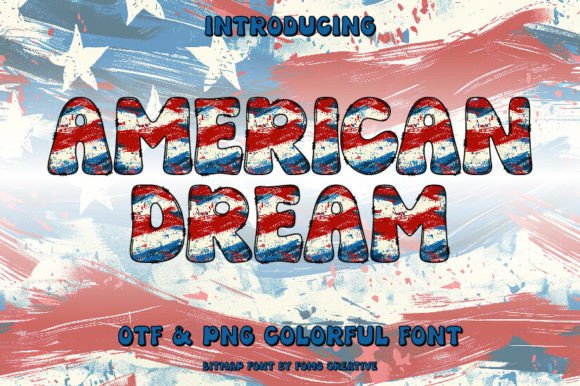
Visually, American Dream breaks the rules of traditional typography in the best way possible. As a premium font, it is a color font, meaning the letters themselves contain vibrant hues, gradients, and texture right out of the box. You don’t need to apply layer styles or clipping masks to get that multi-dimensional look. The style leans into a hand-painted aesthetic, bridging the gap between a structured display font and a fluid script font. The letterforms have a lively bounce, and the baseline isn't rigidly straight, which gives the text a human touch. This isn't the font for your legal disclaimers or your body copy; it is a specialty typeface designed for high-impact moments where you need to grab attention instantly.
Injecting Personality into Modern Typography
One of the biggest challenges in modern typography is finding a voice that doesn't sound generic. We are drowning in minimalist sans-serifs that, while functional, often lack soul. American Dream is the antidote to design boredom. Its personality is unapologetically loud and cheerful. When you apply this font to a headline, it immediately sets a tone of approachability and fun. It tells the viewer that the brand behind the message doesn't take itself too seriously, or that the content is meant to entertain and delight.
Consider the visual hierarchy of your next project. A strong display font like American Dream allows you to create a massive contrast between your headers and your body text. For example, pairing the colorful, textured weight of American Dream with a clean, geometric sans-serif for your body copy creates a balanced composition. The eye is drawn to the header first because of the color and movement, but the brain can relax when reading the accompanying text. This interplay between a loud creative font and a quiet utility font is a hallmark of professional editorial design and sophisticated web design.
Real-World Applications for Brands and Creators
Where does American Dream actually fit into a workflow? The applications are surprisingly broad, provided you use it with intent. For small business owners and entrepreneurs, this typeface is a secret weapon for seasonal campaigns. Think about the visual noise of a Black Friday sale or a Summer launch. Standard black text gets lost in the scroll. However, a header in American Dream, with its built-in color palette, can stop a thumb mid-scroll on Instagram or Pinterest. It is exceptional for social media graphics where the goal is immediate engagement.
Beyond the digital screen, this font shines in packaging design. If you are selling artisanal goods, children’s products, or anything related to food and beverage, the "handmade" vibe of this typeface builds trust. It suggests that there is a human behind the product. It works beautifully on labels, hang-tags, and stickers. For bloggers and content creators, using American Dream for your logo design or chapter headers in an e-book can define your visual identity without needing to hire an illustrator for every page. It acts as a consistent brand marker that readers will learn to recognize.
Strategic Considerations: From Pairings to Licensing
While American Dream is a powerful tool, using it effectively requires some strategy. First, you must evaluate the project fit. Because it is a highly stylized handwritten font, it demands significant white space. If you try to cram it into a small text box or use it for long sentences, the legibility will suffer, and the design will feel cluttered. It is best used for short, punchy headlines—three to five words maximum.
When it comes to font pairing, contrast is your friend. Avoid pairing American Dream with other decorative fonts, such as a complex script font or a vintage serif font. The visual styles will clash, creating a chaotic look. Instead, look for a neutral partner. A clean sans-serif like Montserrat, Roboto, or Lato works exceptionally well. These fonts have a quiet personality that allows American Dream to take center stage without competing for attention.
Before committing to a commercial font, always test the specific characters you need. Because color fonts can sometimes render differently across various software—like Adobe Photoshop vs. Illustrator vs. Canva—you should run a test export. Check the kerning (the space between letters) to ensure the playful movement doesn't accidentally create awkward gaps. Additionally, review the licensing. If you are a freelancer creating a logo for a client, or a business owner using it on merchandise, ensure you have the correct commercial license. Most premium font licenses cover digital ads and print, but if you plan to embed it in an app or software, you may need an extended license.
Maintaining Professionalism with Playful Assets
There is a fine line between "playful" and "unprofessional." The key to maintaining brand perception while using a font like American Dream is restraint. If every piece of text on your website is in this font, your site will look like a carnival poster, which can hurt credibility. Use it as a spice, not the main ingredient.
Furthermore, consider the color palette. Since the font comes with its own vibrant hues, ensure the rest of your design colors complement rather than fight with it. Usually, neutral backgrounds—white, off-white, or dark charcoal—allow the colors of the font to pop best. If you place American Dream on a busy photographic background, the text may become unreadable. Using a semi-transparent overlay or a solid color block behind the text can solve this, ensuring your message is communicated clearly while retaining the charm of the typeface.
Ultimately, American Dream is more than just a collection of vectors; it is a mood. It is the right choice when you want to inject optimism into your designs. Whether you are designing a wedding invitation, a podcast cover, or a landing page for a new product, this display font provides a unique visual hook. It captures the essence of modern typography by blending technical precision with artistic flair, helping you build a brand identity that feels vibrant, authentic, and undeniably engaging. When used thoughtfully, it doesn't just display text—it tells a story.