The Green Plaid Typeface: A Designer’s Guide to Whimsical Style
There is a distinct moment in the design process where a project shifts from "functional" to "memorable." Often, that shift happens the moment you select the right typography. When you are working on a brand identity for a bakery, a cover for a children’s book, or an invitation for a garden party, standard corporate fonts like Helvetica or Times New Roman often feel too sterile. You need something with texture, personality, and a heartbeat. This is where the Green Plaid typeface enters the conversation. It isn’t just a set of letters; it is a mood, a vibe, and a design asset that bridges the gap between structured pattern and playful expression.
Visual Characteristics: More Than Just a Name
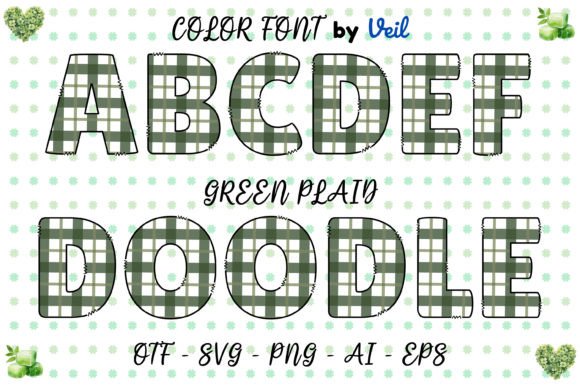
At first glance, the name might evoke thoughts of tartan fabric or vintage flannel, and that association isn't far off in terms of comfort. Green Plaid is a premium font that leans heavily into a retro-inspired, hand-lettered aesthetic. The visual characteristics are defined by a distinct baseline irregularity—the letters don't sit in a rigid, mathematical line, which immediately humanizes the text. The strokes often feature variable weight, mimicking the pressure of a felt-tip marker or a sign-writer’s brush. This gives the typeface a tactile quality that flat, vectorized sans serif fonts simply cannot achieve.
The personality of Green Plaid is inherently optimistic and artisanal. It avoids the sharp, aggressive edges of modern tech branding in favor of soft curves and open counters. If you look closely, you’ll notice subtle ligatures and stylistic alternates that allow letters to flow into one another, creating a rhythm in headlines that feels organic rather than mechanical. It is a creative font designed to evoke warmth, making it an ideal candidate for any project that needs to feel approachable and authentic.
Where Green Plaid Shines: Practical Applications
Understanding a font’s "personality" is one thing; knowing where to deploy it is another. Because Green Plaid falls into the category of display fonts with a handwritten font influence, it is not designed for long-form body text. You wouldn't use it for a legal disclaimer or a 500-page novel. However, its utility in high-impact visual areas is immense.
Children’s Books and Educational Materials
The prompt highlights the use of playful fonts in children's literature, and Green Plaid is a perfect example of this principle in action. In editorial design, specifically for young readers, readability is paramount, but so is engagement. The whimsical nature of Green Plaid captures attention without intimidating the reader. It works beautifully for chapter titles or pull quotes in activity books, creating an inviting atmosphere that encourages kids to dive in.
Branding and Logo Design
For entrepreneurs and small business owners, a logo design must encapsulate the entire brand story in a single glance. Green Plaid is exceptionally effective for brands in the artisanal food, boutique retail, or lifestyle coaching sectors. It suggests that a real human is behind the business, not a faceless corporation. When used in a logo, it establishes a brand identity that feels established yet friendly.
Packaging and Product Design
On a crowded shelf, packaging design needs to fight for attention. A serif font might look too traditional, and a geometric sans serif font might look too clinical. Green Plaid offers a middle ground—distinctive enough to stand out, but legible enough to communicate product details. It is particularly effective on packaging for organic goods, craft supplies, or stationery.
Digital Media and Social Graphics
In the fast-paced world of web design and social media, stopping the scroll is the primary objective. Green Plaid adds a layer of personality to social media graphics that standard web fonts lack. It works exceptionally well for Instagram quotes, Pinterest pins, and YouTube thumbnails. The font’s inherent texture ensures that text remains readable even when overlaid on busy background images, provided there is sufficient contrast.
Strategic Typography: Influence and Impact
Choosing a font is a strategic decision that influences how your audience perceives your message. Modern typography theory suggests that typefaces carry emotional connotations. Green Plaid influences your design in several key ways:
- Brand Perception: Using a creative font like Green Plaid signals that your brand values creativity and individuality. It tells the viewer that you care about aesthetics and aren't afraid to step outside the box of standard corporate design.
- Visual Hierarchy: Because Green Plaid is a display font, it naturally draws the eye. Use it for your H1 headlines or hero text. This creates a clear hierarchy where the audience knows exactly where to look first, followed by supporting text in a cleaner sans serif font.
- Audience Engagement: Fonts that look "human" tend to increase trust. The slight imperfections in a handwritten font style like Green Plaid make the message feel like a personal note rather than an automated broadcast. This can lead to higher engagement rates on marketing materials.
Implementation: Pairing and Testing
No font exists in a vacuum. To get the most out of Green Plaid, you need to treat it as part of a typographic ecosystem. Here is practical guidance on integrating it into your workflow.
The Art of the Font Pairing
The golden rule of font pairing is contrast. Since Green Plaid has a lot of character and movement, you need a "quiet" partner to balance it out. Avoid pairing it with other script fonts or highly decorative serif fonts, as this will create visual chaos.
Instead, look for a sturdy, neutral sans serif font for your body text. Fonts like Open Sans, Roboto, or Lato provide a clean, legible foundation that allows Green Plaid to be the star of the show in the headlines. If you prefer a serif font for body text, choose one with simple, traditional forms like Georgia or Merriweather to maintain professionalism.
Readability Considerations
As an experienced designer, I always recommend testing your typography at various sizes. Green Plaid is designed for impact, so it thrives at larger point sizes (24pt and above). At smaller sizes, the decorative details might muddy up, reducing legibility—especially on low-resolution screens. Always test your web design mockups on mobile devices to ensure the font remains crisp.
Licensing and Commercial Use
For designers, entrepreneurs, and agencies, the legal aspect of typography is non-negotiable. Green Plaid is a commercial font. This means if you are using it for a client’s logo design, a product for sale, or marketing materials, you must ensure you have the correct license. "Free for personal use" does not cover commercial projects. Checking the license protects your business and supports the type designers who create these valuable design assets.
Final Thoughts on Creative Execution
The goal of using a typeface like Green Plaid is to inject soul into your visuals. Whether you are a crafter designing labels for homemade jam, a publisher working on a new magazine layout, or a marketer creating a campaign for a boutique event, this font offers a bridge between professional polish and handcrafted charm. It reminds us that in a digital world, the human touch is still the most powerful design tool we have. Use it wisely, pair it effectively, and let it tell your story.