Adding Flavor to Your Layouts with Delicious
A Feast for the Eyes: Understanding the Visual Profile
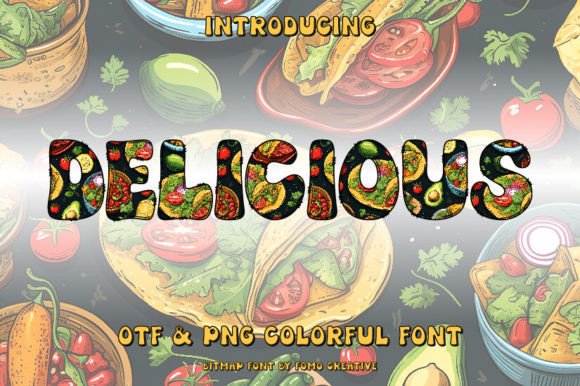
When you first encounter the Delicious typeface, it immediately strikes you as something more than just a collection of letters. Unlike standard monochromatic fonts that sit quietly in the background, this is a display font that demands attention through its unique construction. It falls into the category of color fonts, a fascinating development in modern typography where the characters themselves contain rich data beyond simple outlines. We are talking about integrated gradients, shadows, and transparency built directly into the glyph structure.
The personality of Delicious is bold and expressive. It is designed to mimic the depth and vibrancy usually reserved for complex graphic design work. Imagine a header for a magazine or a title card for a video that looks like it has already been stylized in Photoshop, yet remains fully editable text. The visual texture often implies a three-dimensional quality, making the letters appear to pop off the page. This makes it an excellent candidate for projects that need to convey energy, creativity, and a modern aesthetic without spending hours on manual text effects. It is a creative font that serves as a standalone design element.
Where Typography Meets Artistic Expression
Because Delicious carries such a heavy visual weight, it is crucial to understand where it fits best. This is not a serif font for body text, nor is it a simple sans serif font for technical documentation. Instead, think of it as a specialized tool for high-impact visuals. In brand identity, it can be a game-changer for brands that want to appear youthful, energetic, or avant-garde. A coffee shop with a modern twist, a digital marketing agency, or a music festival could leverage the distinct look of Delicious to create a memorable impression.
Consider the realm of packaging design. If you are designing a label for a specialty beverage or a limited-edition snack, this font can convey flavor and excitement instantly. The visual complexity of the letters suggests richness, which can subconsciously influence how a consumer perceives the product. Similarly, in editorial design, using Delicious for pull quotes or section headers can break the monotony of a text-heavy layout, guiding the reader's eye exactly where you want it.
Digital applications are equally promising. Social media graphics need to stop the scroll, and the vibrant nature of this typeface does exactly that. Whether you are creating Instagram stories, YouTube thumbnails, or website banners, the font adds a layer of polish that standard text cannot match. It bridges the gap between static text and illustration, offering a hybrid solution that saves time while maximizing visual impact.
Strategic Implementation: Using Delicious Effectively
Adopting a premium font like Delicious requires a strategic approach. Because the letters are so visually dense, readability can become an issue if used incorrectly. The golden rule for this type of display font is to keep it large. It is meant for headlines, logos, and short bursts of text, not for paragraphs. When you scale it down too much, the intricate details—those gradients and shadows—can turn into visual noise, making the text hard to decipher.
When working with font pairing, contrast is your best friend. Since Delicious is expressive and decorative, it needs a grounding partner. Pair it with a clean, geometric sans serif font for your body copy. A typeface like Montserrat, Lato, or Open Sans provides a neutral canvas that allows the headers created with Delicious to shine without competing for attention. Avoid pairing it with other decorative or script fonts, as this will almost certainly result in a chaotic, unprofessional layout.
Practical Tips for Designers and Creators
- Color Harmony: Even though the font has built-in colors, ensure those colors complement your overall palette. If the font's embedded gradient clashes with your background, the design will feel disjointed.
- Spacing Matters: Display fonts often benefit from adjusted letter-spacing (tracking). Because Delicious has complex shapes, tightening or loosening the space between letters can help improve legibility and visual balance.
- Context is Key: Use this font for projects targeting audiences that appreciate creativity—think designers, younger demographics, or creative industries. It might feel out of place on a corporate legal document or a formal invitation.
The Technical and Licensing Landscape
Before incorporating Delicious into your workflow, it is vital to review the technical specifications and licensing terms. As a commercial font, it usually requires a specific license depending on the usage. If you are a freelancer creating a logo for a client, you need to ensure the license covers commercial use and whether it needs to be transferred to the client or if your license covers the creation of the logo design for them.
Furthermore, check the file formats. For web design, you will need formats like WOFF or WOFF2 that support color glyphs across modern browsers. While support for color fonts is growing, always test how the font renders on different devices. On mobile screens, for instance, the fine details might render differently than on a high-resolution desktop monitor. For print design, ensure your printing software supports the transparency and color data embedded in the font files; otherwise, you might end up with a solid black block where the colorful text should be.
Ultimately, Delicious is more than just a typeface; it is a design asset. It offers a shortcut to high-end visual effects, allowing marketers, bloggers, and small business owners to produce web designs and print materials that look professionally retouched. By respecting its visual intensity and using it sparingly for maximum effect, you can add a genuinely dynamic touch to your creative projects.